E-SPORT Network
Overview
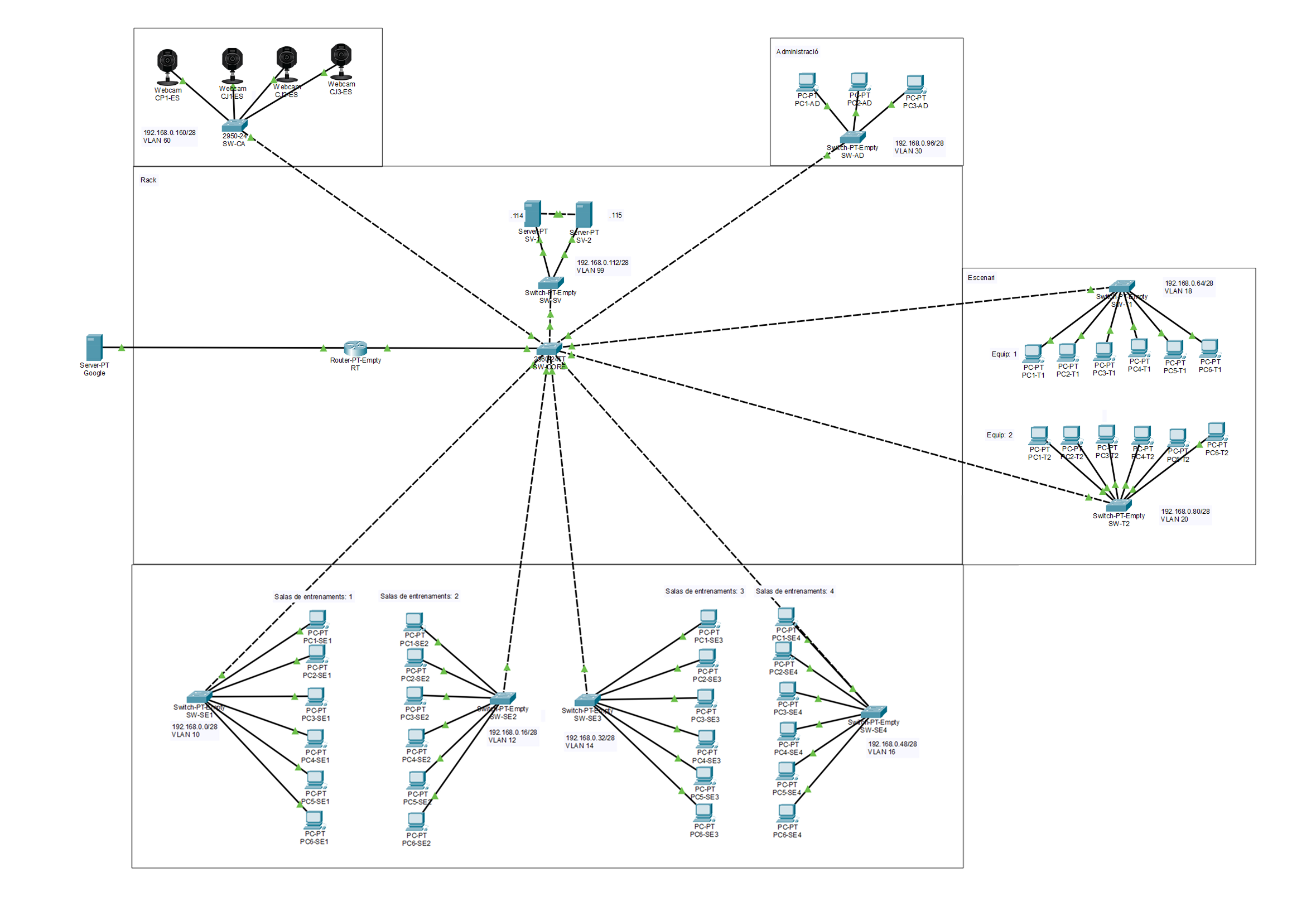
Design and implementation of a network infrastructure for a large-scale e-sports project in a city. The network connects multiple devices for players, administrators, cameras, and servers, ensuring segmentation, security, and efficient communication through VLANs and centralized routing. An architecture based on Router-on-a-Stick was implemented, with distributed switches, patch panels, and physical and logical segmentation.
Problem
A scalable and secure network was required to support many player devices in an e-sports environment, avoiding congestion, ensuring traffic segmentation, and controlling access between different user types. It was also necessary to centralize IP address management and provide controlled access to internal and external services.
News
Work in progressThis case study evolves over time: I refine UI, rewrite parts of the code, and keep improving structure and clarity as I learn.
Solution
A segmented LAN was designed using VLANs, where each device group (gaming, administration, cameras, and servers) belongs to its own subnet. A Router-on-a-Stick model enabled inter-VLAN routing over a single trunk link to the router. A DHCP server assigned IP addresses per VLAN. Access control policies (ACLs) restricted communication, allowing only specific connections (e.g., between administrators and servers). An external simulated exit to a server (8.8.8.8) represented internet access.
Learnings
- • Designing segmented networks with VLANs to improve organization and security.
- • Configuring Router-on-a-Stick to enable communication across multiple VLANs.
- • Using DHCP for automatic IP assignment across different subnets.
- • Applying ACLs to control traffic and restrict device communications.
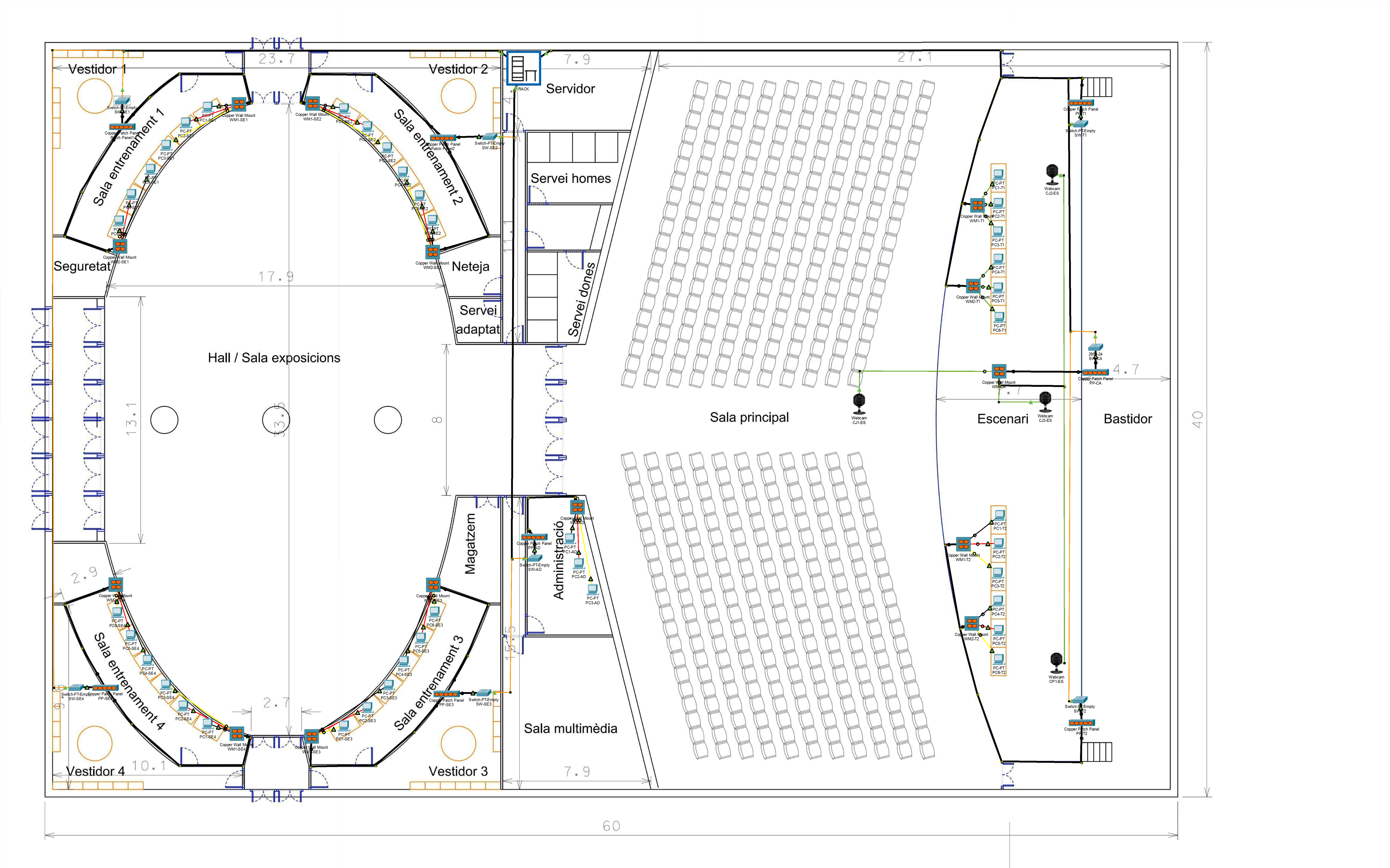
- • Understanding physical network infrastructure (patch panels, racks, switches, structured cabling).
Next Improvements
- • Implement redundancy (switches and links) to avoid single points of failure.
- • Improve security by adding a dedicated firewall instead of relying only on ACLs.
- • Optimize VLAN management with more advanced tooling or automation.
- • Add network monitoring to detect failures and bottlenecks in real time.
Gallery
Tech Stack
Tools
Features
network
configuration
security
systems
documentation
Actions
Network
- 30 Administrators
- 60 Cameras
- 99 Servers (includes backup)
- 10-20 Gaming PCs
Architecture
- • Router on a Stick
- • Core switch with trunk links
- • Access switches
- • Patch panels and structured cabling
Features
- • DHCP per VLAN
- • Network segmentation
- • Access control via ACLs
- • Simulated external access (8.8.8.8)